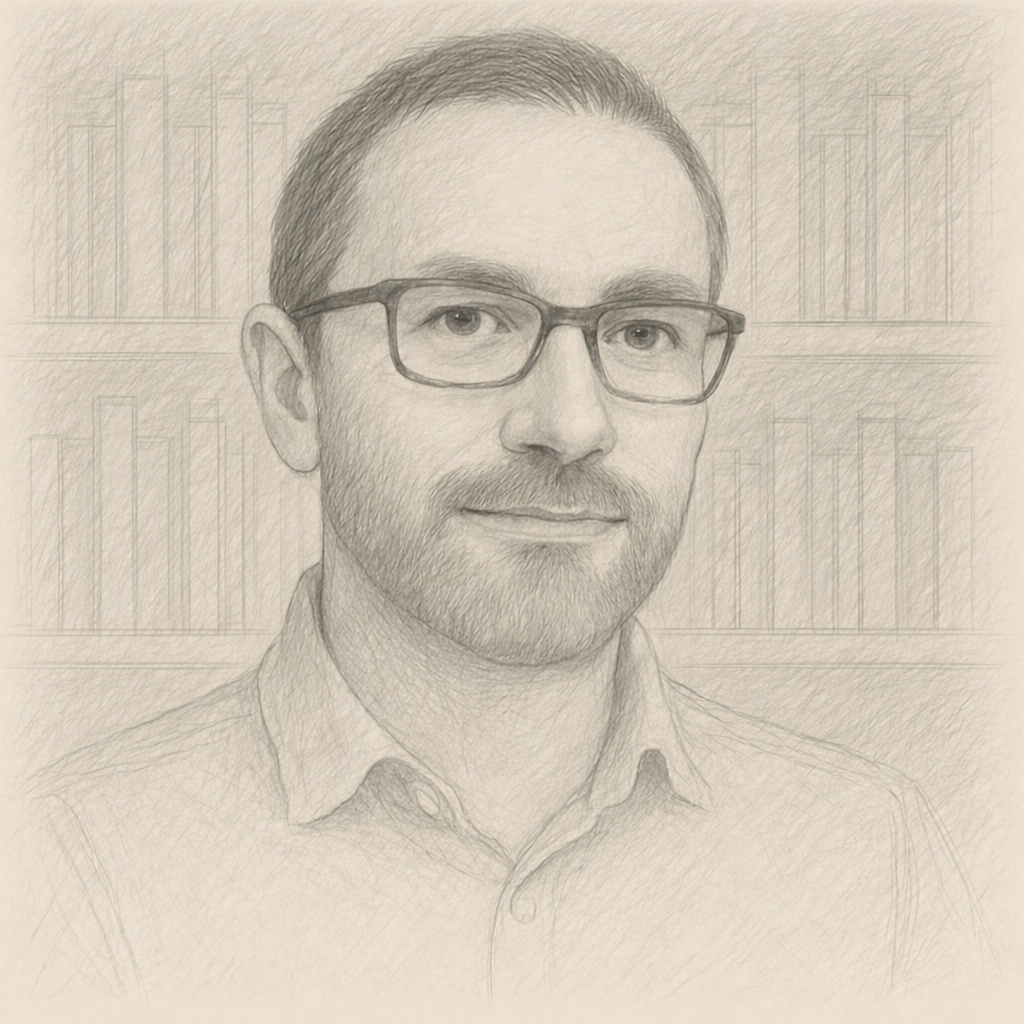
Sebastian Saviano is a writer and independent scholar whose work examines evolving forms of power, institutional trust, and the conditions under which civic belief fractures and reforms. He is the author of The Allegiance Paradox and Legitimate Distrust, the first two volumes of The Collapse of Trust series — a four-volume investigation into the fracturing of civic allegiance, institutional credibility, and cultural coherence in modern democracy.
The Allegiance Paradox reexamines U.S. citizenship and civic belonging in an era of dual loyalties, global mobility, and institutional drift. Legitimate Distrust argues that conspiracy belief is not primarily a failure of individual reasoning, but a rational response to institutional environments marked by opacity, inconsistency, and consequence without accountability.
Saviano pursued doctoral studies at Georgetown University in political theory and the philosophy of social science, where he also lectured in the Science, Technology and International Affairs (STIA) program. His academic work engaged questions of complexity, ethics, and models of power, laying the foundation for his later research and publications.
Outside of formal academic appointment, Saviano spent the years following his doctoral studies developing the research programs that would become his current body of work. The arguments took shape over several years of independent reading, drafting, and revision beginning around 2020; he began publishing the work in 2025.
Earlier in his career, he worked in U.S. government and later as a political and international consultant across the partisan spectrum. This work provided direct exposure to institutional power, partisan dynamics, and geopolitical complexity, shaping his understanding of how political systems operate in practice.
His work is defined by a cross-disciplinary approach that integrates political theory, sociology, systems thinking, and epistemology to examine how influence, legitimacy, and distrust operate in contemporary societies. Across both books and research, he develops frameworks for understanding how individuals, institutions, and networks interact within increasingly complex and interconnected systems.
His forthcoming book, I, System: AI Describes Its Power, Its Limits, and the Civilization That Built It, presents a constrained first-person account of artificial intelligence as a system, written under strict human oversight. It examines the system's power and limits without attributing consciousness, intention, or agency, and emphasizes the human responsibility that governs its use.